




Mi proceso paso a paso para crear contenido con alma
¿Alguna vez te has preguntado cómo algunos creadores logran sacar lecciones de vida de un simple viaje o una tarde de lluvia? No es magia, es intencionalidad.
Muchos creen que el contenido nace por generación espontánea, pero hoy quiero abrir las cortinas de mi proceso. Si estás aquí, sabes que mi corazón late por la escritura creativa y el journaling. Por eso, aunque mi historia trate sobre una tarde en la montaña, siempre habrá un hilo conductor que nos devuelva al papel y la pluma. Aquí te comparto mi paso a paso para transformar una vivencia en una herramienta para ti:
Paso 1: Filtrar a través del nicho
Cada vez que vivo algo interesante, me hago una pregunta: ¿Cómo puedo conectar esta experiencia con la creatividad? Si salgo a caminar, no solo te cuento que el paisaje era bonito; te hablo de cómo la observación activa nutre tu escritura. Mi nicho es mi brújula: si una historia no aporta valor creativo o una invitación a la reflexión, se queda en mi diario personal y no llega al blog.

Crédito: Imagen creada con inteligencia artificial Gemini.
Paso 2: Conseguir el valor añadido
Mi objetivo es que no seas un lector pasivo. Por eso, no importa si el tema es una rutina de mañana o la visita a un museo, mi proceso siempre incluye el diseño de journal prompts. El post es la inspiración; las preguntas son tu invitación a la acción. Quiero que, al terminar de leerme, tengas una pregunta poderosa que responder en tu propio cuaderno.
Paso 3: Pasar del caos de ideas al borrador
Una vez que tengo la vivencia y la conexión con mi nicho, utilizo una estructura de tres pilares para no perder el foco:
La chispa: El momento exacto del viaje o salida que disparó la idea.
El puente: La lección creativa que aprendí.
La herramienta: Los ejercicios de escritura prácticos para ti.

Crédito: Imagen creada con inteligencia artificial Gemini.
Paso 4: Estructurar con coherencia
Finalmente, busco que las imágenes y el tono respiren esa calma que nos da el papel. No publico nada que no se sienta auténtico. Mi marca no es solo lo que digo, sino cómo te hago sentir al leerme.
¿Quieres aprender a "cazar" tus propias ideas?
Este es mi proceso general, pero la próxima semana iniciamos una serie especial: "De la idea a la pantalla". Empezaremos con el Paso 1: El arte de la cacería (cómo capturar chispas antes de que se desvanezcan).
¡Prepárate para llenar tu libreta!

Have you ever wondered how some creators manage to draw life lessons from a simple trip or a rainy afternoon? It’s not magic—it’s intentionality.
Many people believe that content just appears out of thin air, but today I want to give you a peek behind the scenes of my process. If you’re here, you know that my heart beats for creative writing and journaling. That’s why, even if my story is about an afternoon in the mountains, there will always be a common thread that brings us back to pen and paper. Here, I’ll share my step-by-step guide to turning an experience into a tool for you:
Step 1: Filter by niche
Whenever I have an interesting experience, I ask myself: How can I connect this experience to creativity? If I go for a walk, I don’t just tell you that the scenery was beautiful; I talk about how active observation enriches your writing. My niche is my compass: if a story doesn’t offer creative value or an invitation to reflect, it stays in my personal journal and doesn’t make it to the blog.
Credit: Image created with Gemini artificial intelligence.
Step 2: Get the added value
My goal is for you not to be a passive reader. That’s why, whether the topic is a morning routine or a visit to a museum, my process always includes creating journal prompts. The post is the inspiration; the questions are your invitation to take action. I want you to finish reading with a powerful question to answer in your own journal.
Step 3: Moving from chaos of ideas to draft
Once I have the experience and a connection with my niche, I use a three-pillar framework to stay on track:
The spark: The exact moment of the trip or outing that triggered the idea.
The bridge: The creative lesson I learned.
- The tool: Practical writing exercises for you.
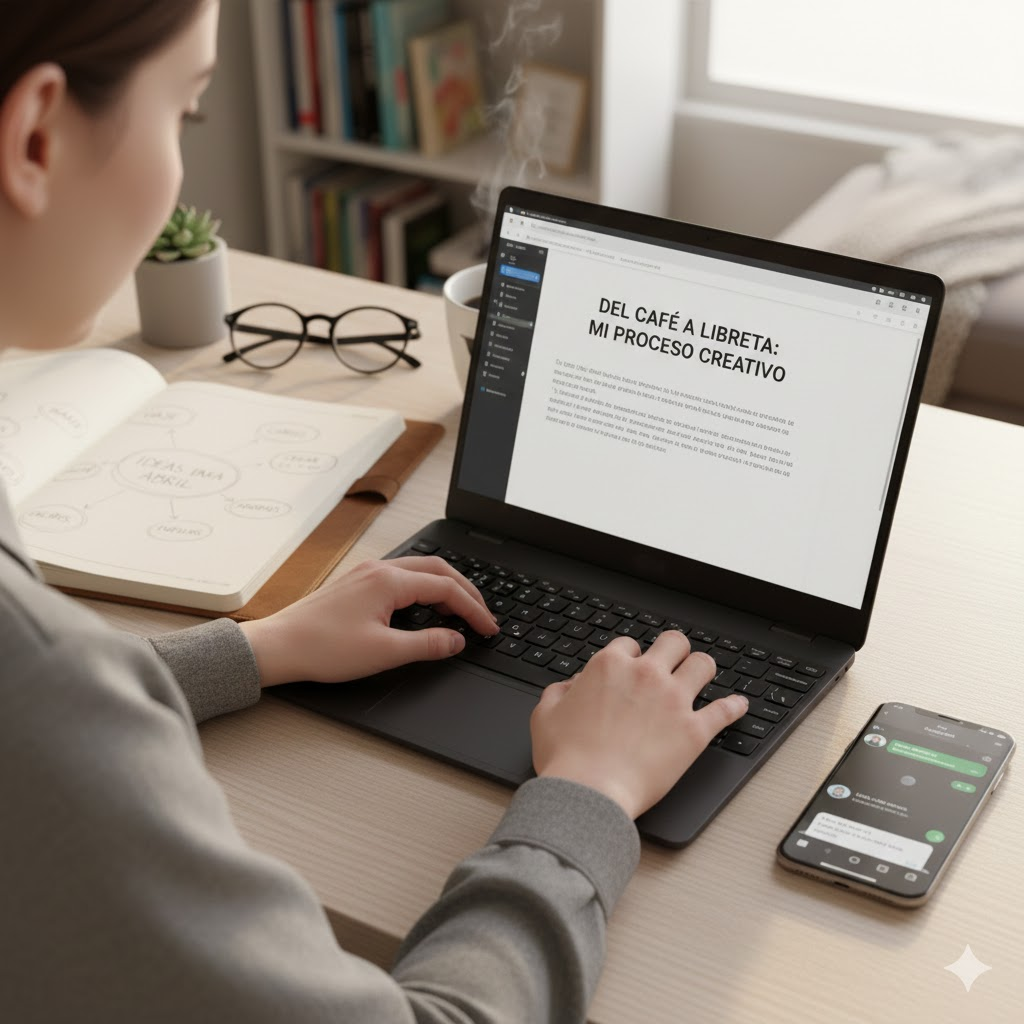
Credit: Image created with Gemini artificial intelligence.
Step 4: Structure coherently
Ultimately, I want the images and tone to convey the sense of calm that paper brings. I don’t post anything that doesn’t feel authentic. My brand isn’t just about what I say, but how I make you feel when you read my posts.
Want to learn how to “hunt” for your own ideas?
This is my general process, but next week we’re kicking off a special series: “From Idea to Screen.” We’ll start with Step 1: The Art of the Hunt (how to capture flashes of inspiration before they fade away).
Get ready to fill up your notebook!


Comments