












































No posts found
Try adjusting your filters or wait for the worker to classify more posts.


When the East Wind Blows
When the East Wind Blows
Yesterday, I have walked 26K steps through different monuments of Nara, and I am overwhelmed both physically and emotionally. So if I drift all over the place while I write this post, please pardon me. I will start with this poem by Sugawara-no-Michizane (845–903). It is a famous one, and many other famous people and scholars used it later in various context, but I want you to know that this is the original, written around 900 AD.
東風吹かば (Kochi fukaba): "When the east wind blows"
匂いをこせよ (Nioi okoseyo): "Send your scent"
梅の花 (Ume no hana): "Oh plum blossoms"
主人なきとて (Arusi nashi tote): "Although your master is not here"
春な忘れそ (Haru na wasureso): "Do not forget the spring"
Sugawara-no-Michizane was a celebrated scholar, poet, and politician during Japan's Heian period. Born into a family of scholars who served at the Imperial Court, he rose through the ranks due to his exceptional intellect, especially in Chinese studies and poetry (Kanshi). He eventually achieved one of the highest posts in the government, becoming a favorite of Emperor Uda in his efforts to counterbalance the immense power of the Fujiwara clan.
The poem was written in 901 CE when Michizane was unjustly exiled from the capital, Kyoto, to Dazaifu on the distant island of Kyushu. His political rivals, primarily from the powerful Fujiwara clan, falsely accused him of plotting against the imperial throne. Michizane, a loyal and distinguished statesman, died a heartbroken man in exile just two years later. The poem is a poignant farewell to his home, his career, and his beloved Kyoto, expressing a deep sense of loss and despair.
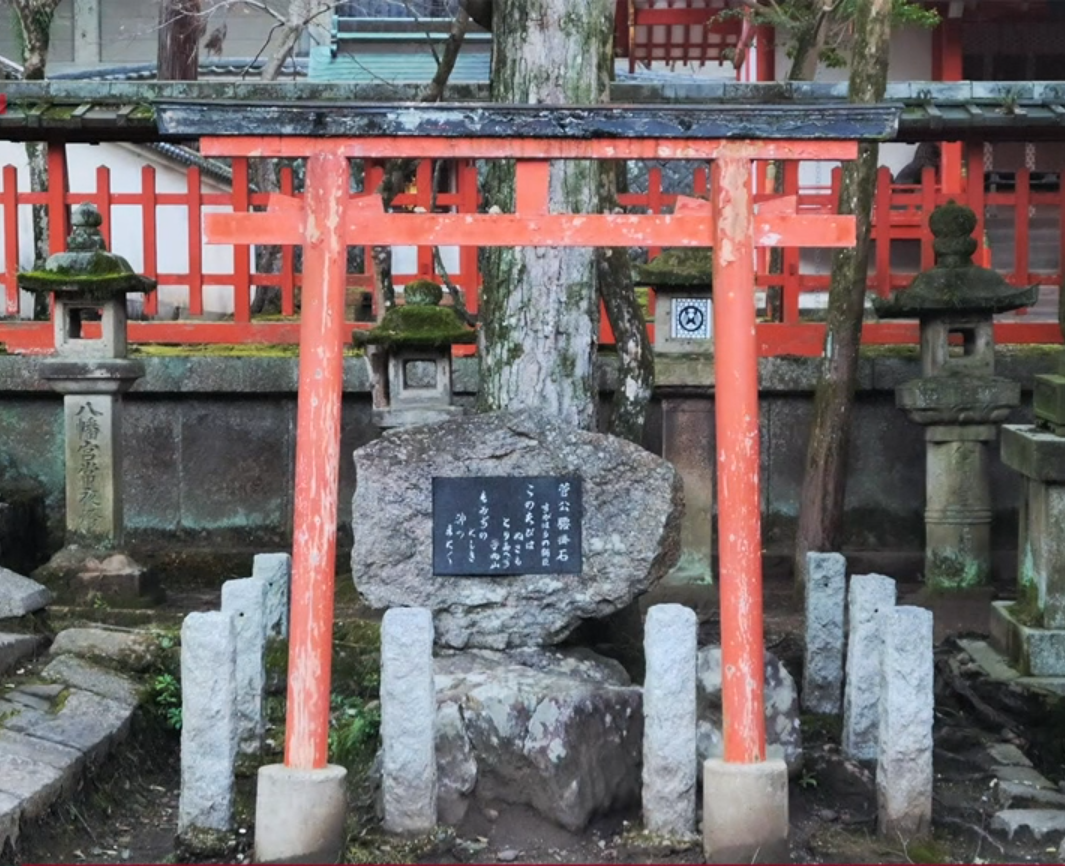
Here at Todai-Ji Temple complex of Nara there is a tiny area where no one goes, rests a stone tablet with this poem (waka), the story goes, this is the place Michizane sat and rested the final time reflecting on his life before he had to leave his beloved city. I will show you the simple tablet and where it rests in the end, but now let me show you the Todai-ji Temple complex in Nara, which is a World Heritage Site.
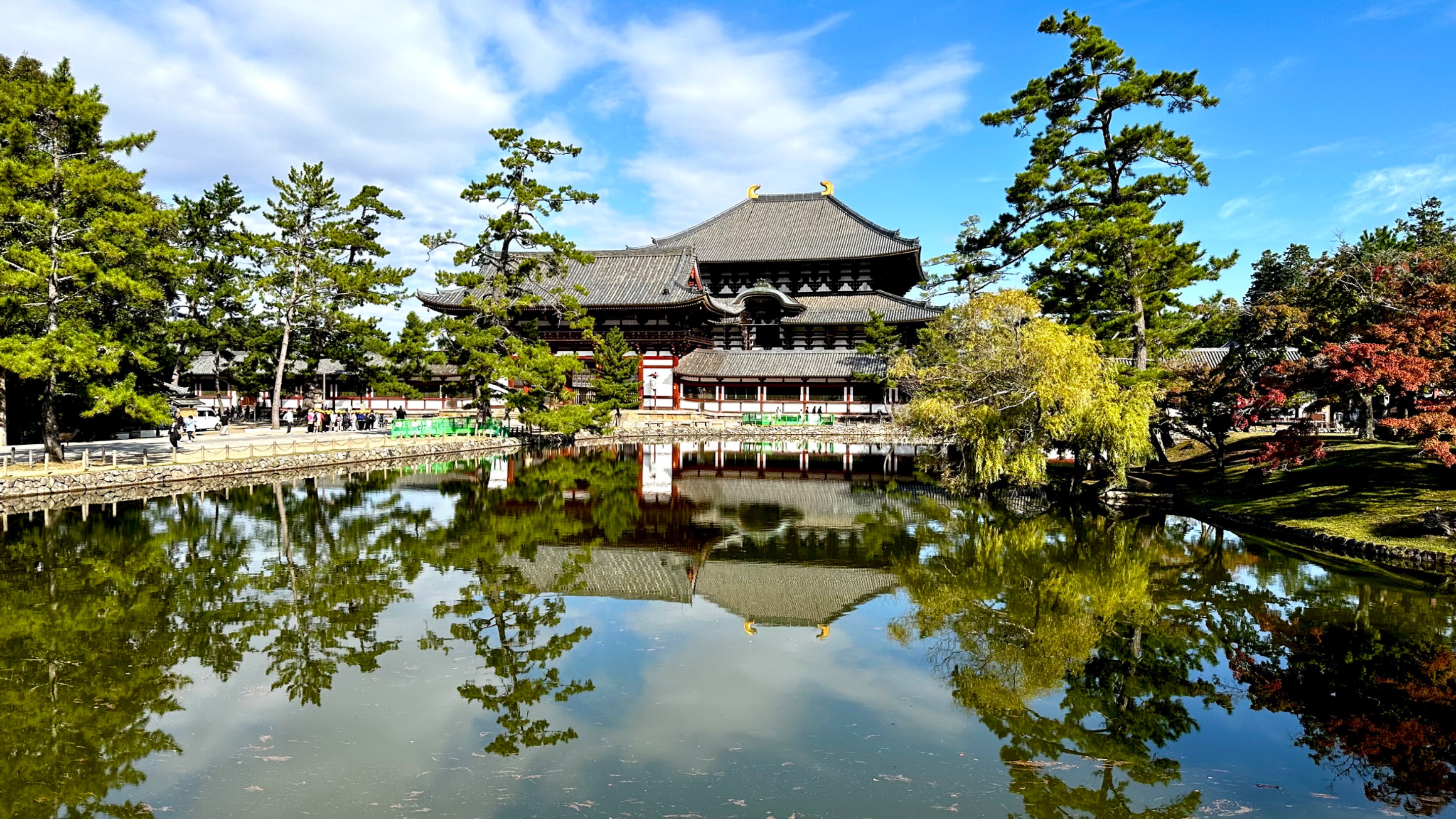
This is the entrance to the main temple across the pond in the morning light.
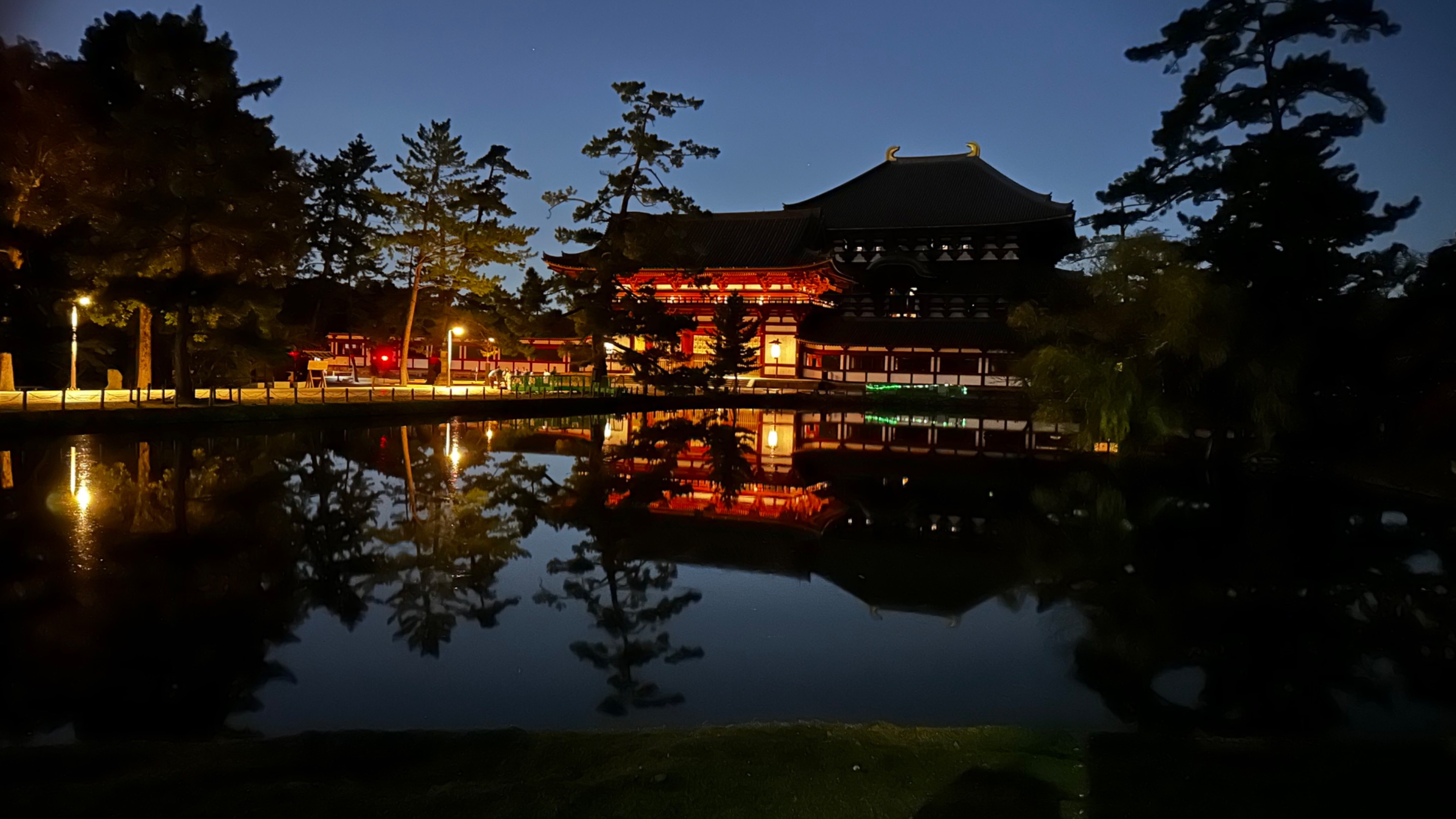
Here is the same view in the evening where I had the whole Temple complex to myself!
Todai-ji Temple
This is the look at the main temple where the Great Buddha is housed. The construction of the Daibutsu (giant buddha) was an ambitious project initiated by Emperor Shōmu on 743 AD. In an era of political upheaval, repeated disasters, and a smallpox epidemic, the massive statue was intended to unify the country under the spiritual protection of the Buddha. Emperor Shōmu saw the project as a way to use the power of Buddhism to stabilize the realm and show imperial authority.
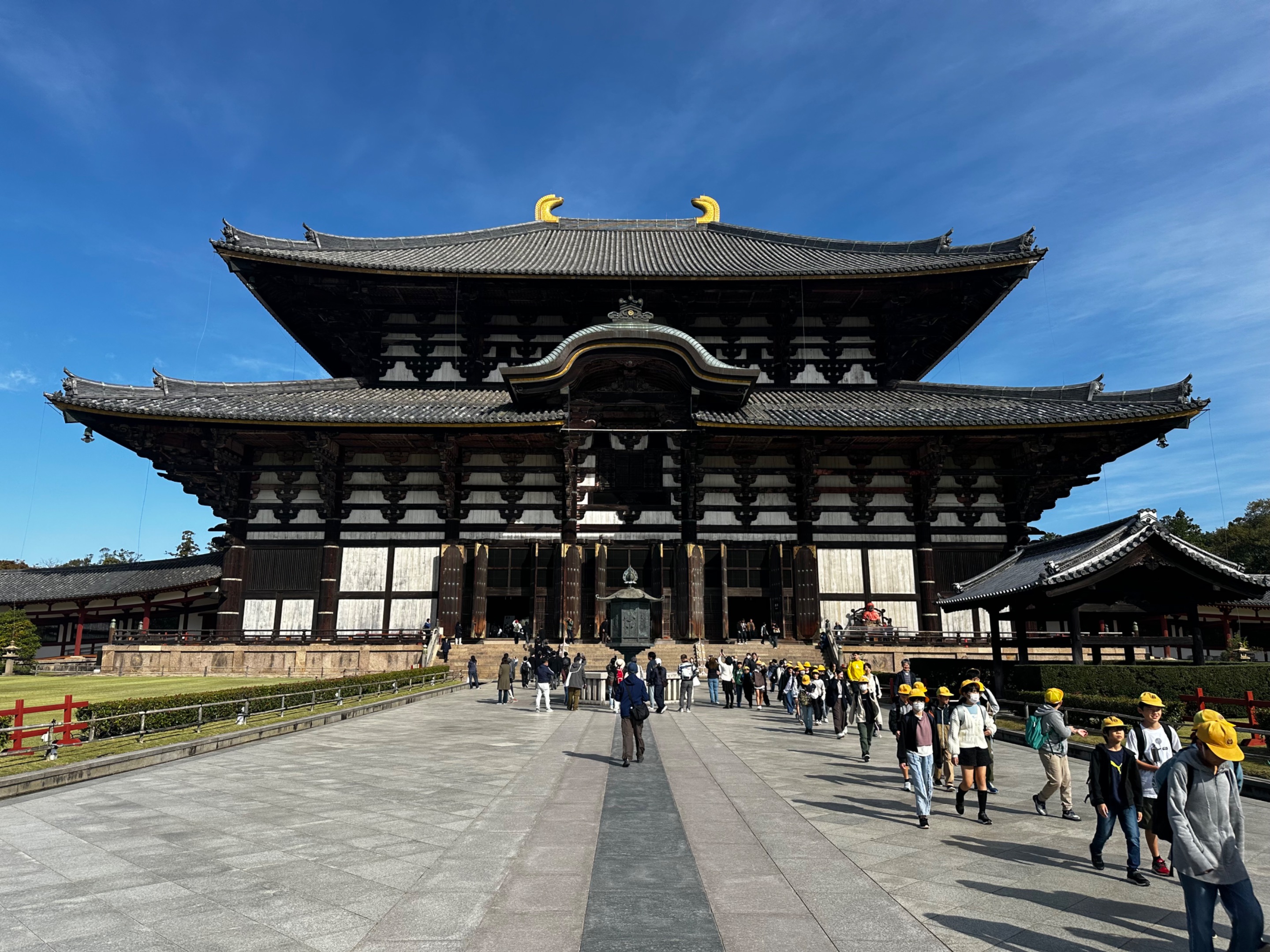
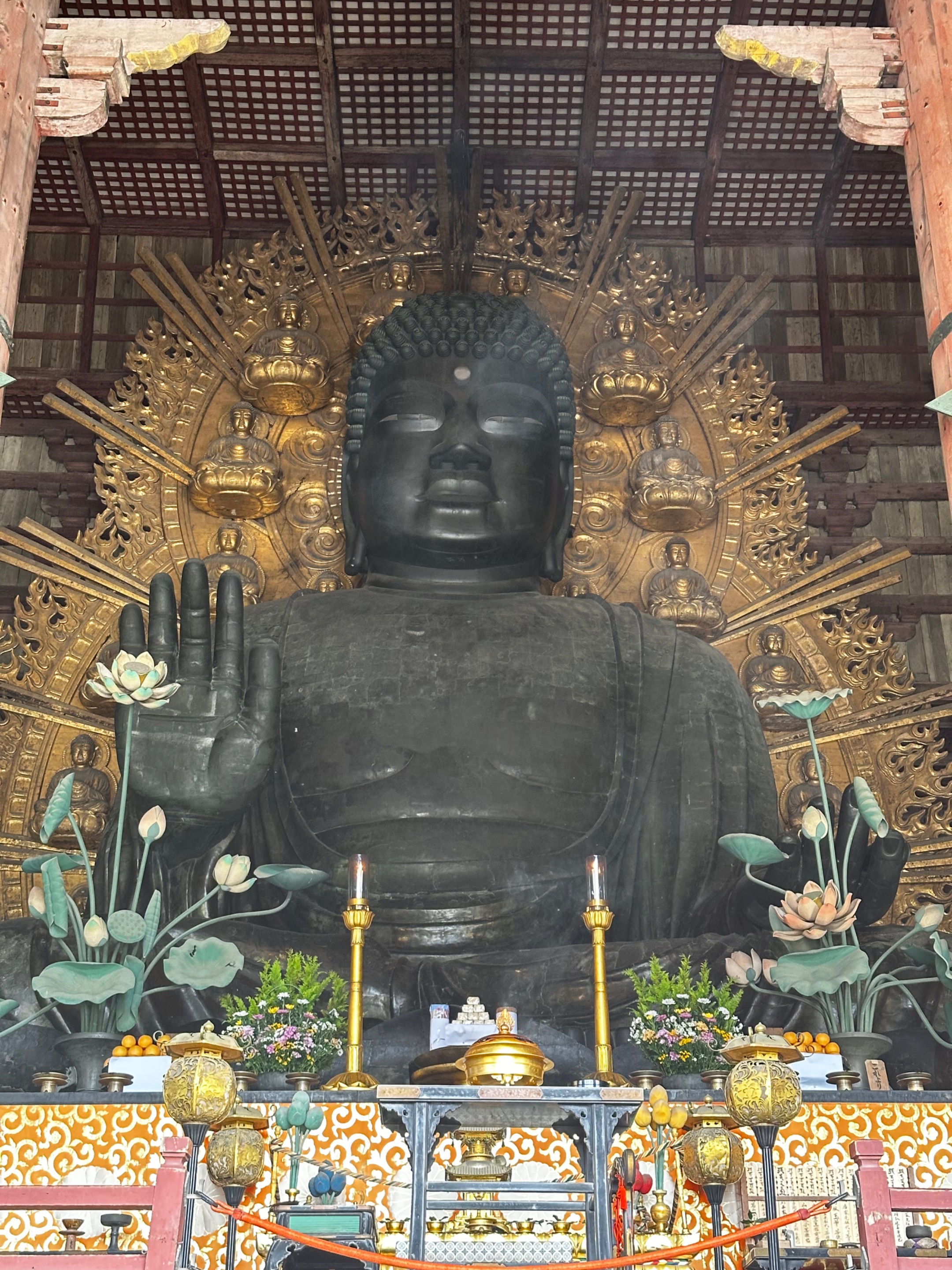
Here is the statue below. I like this side view better than the front view which I posted next. The casting of the statue required enormous amounts of bronze and gold, consuming much of Japan's resources at the time. It was finally completed in 751 CE, and a grand "Eye-Opening Ceremony" was held in 752 CE, marking its consecration. It is written in the signage and also in the movie at the adjacent museum that about 2.5 million people were directly or directly involved in the construction of this project, which was, at the time, about half the population of Japan!
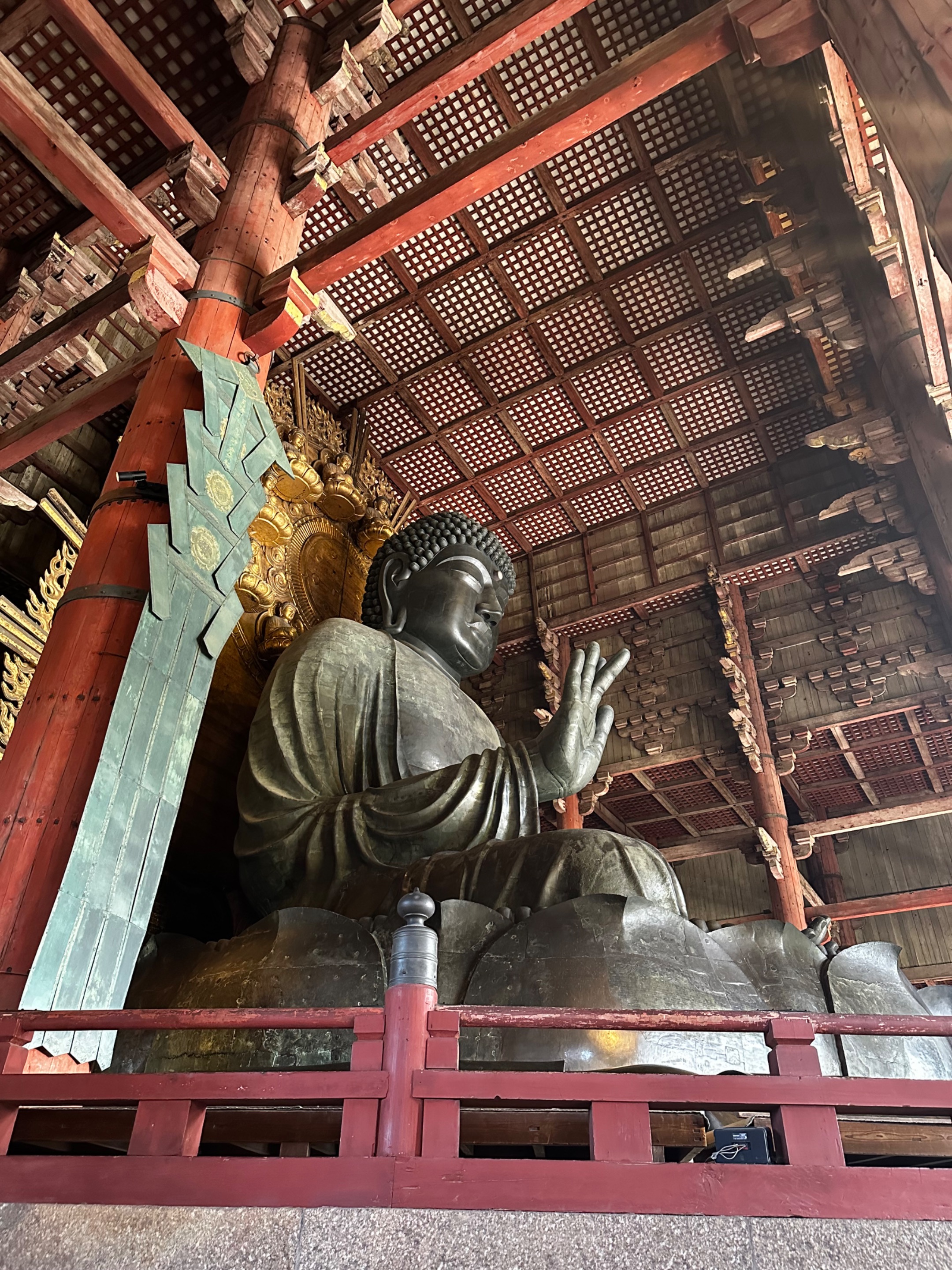
While the current building is immense—measuring 57 meters (187 ft) wide and 49 meters (161 ft) tall—it is actually the third iteration. The original hall was significantly larger, estimated to be about 30% wider than the structure you see today. The Daibutsuden has been destroyed twice by fire during warfare (in the 12th and 16th centuries). The current structure was completed in 1709 during the Edo period.
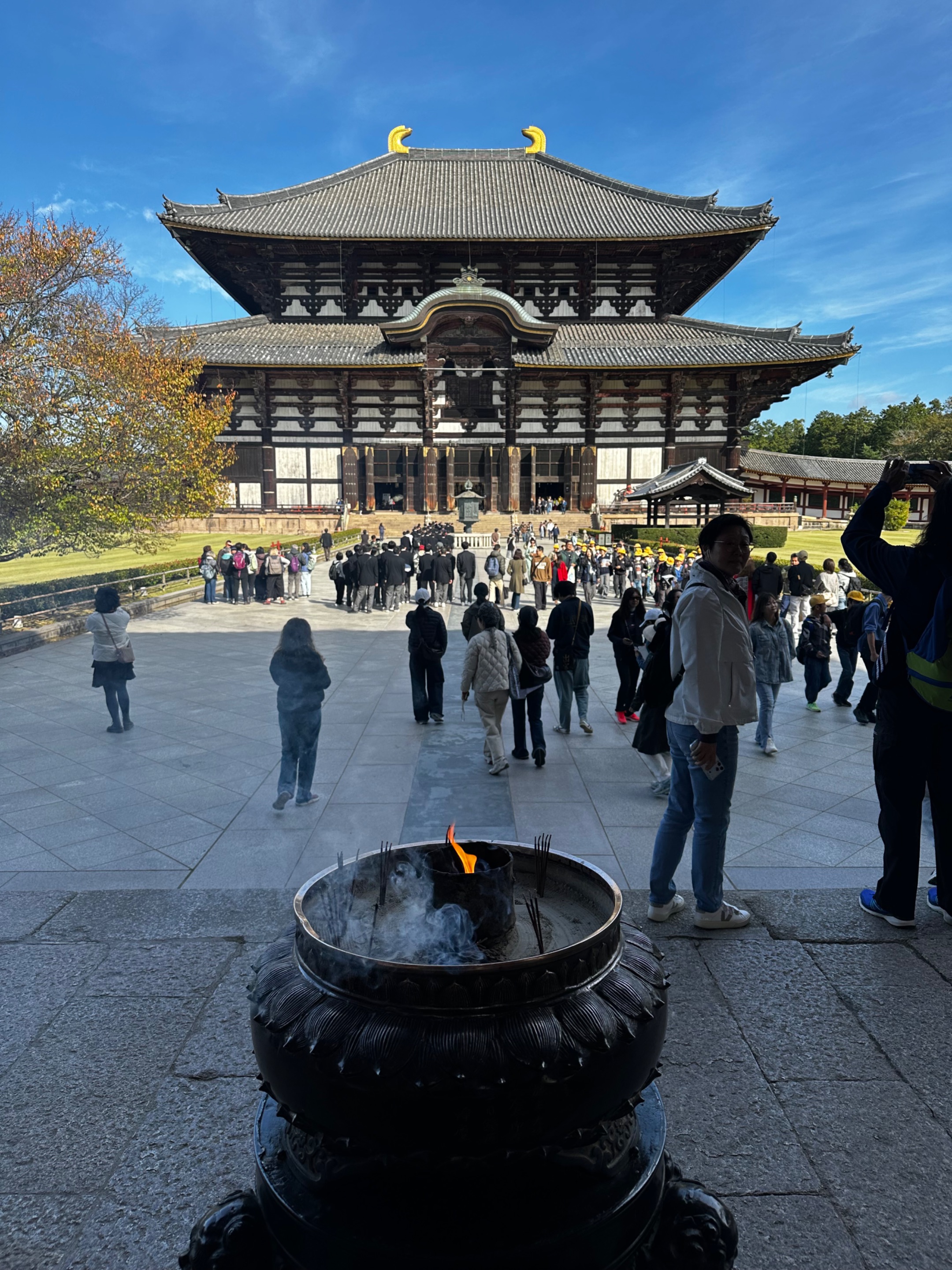
Alright that is a lot of history in a short amount of time and I am soon going to run out of steam and time to write. Mind you this is only one temple. There are at least 10 more that I want to describe in detail and I do not have time for that today.
So it is time to move on and get towards Todai-ji Nigatsu-do. Another famous and iconic building that you could have seen picture if you looked up Nara
Todai-ji Nigatsu-do and Urasando Walk
Urasando Walk is just a stone path that leads to Nigatsu-do. In the image below the building in the distance with a balcony, is Nigatsu-do. I don't know what it is about this path and its stone walls of the side, and how it curves, it is perhaps the most spectacular ancient path that I walked.
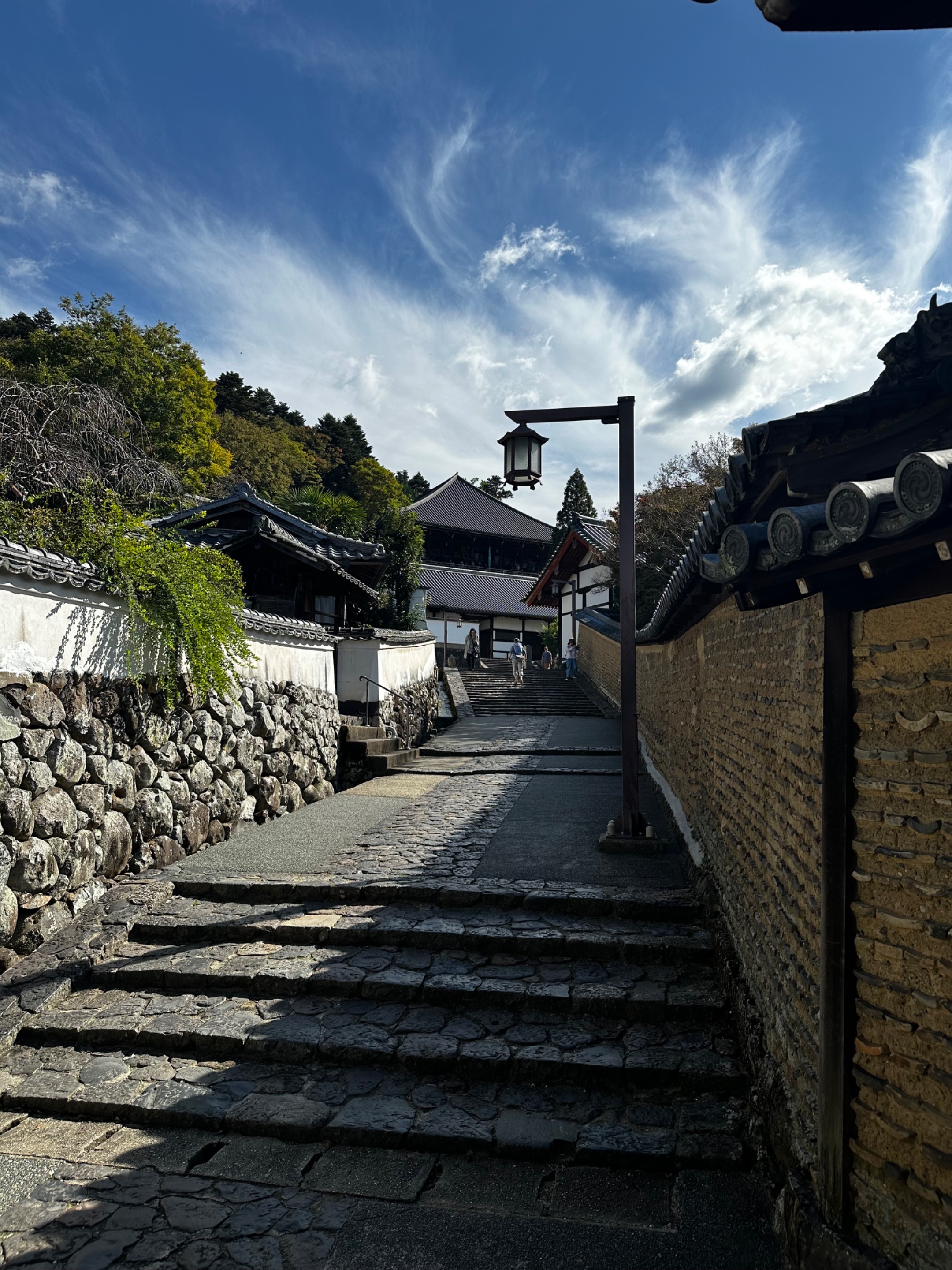
It is not crowded at all compared to Japanese standards, right? I liked it so much that I went back at night.
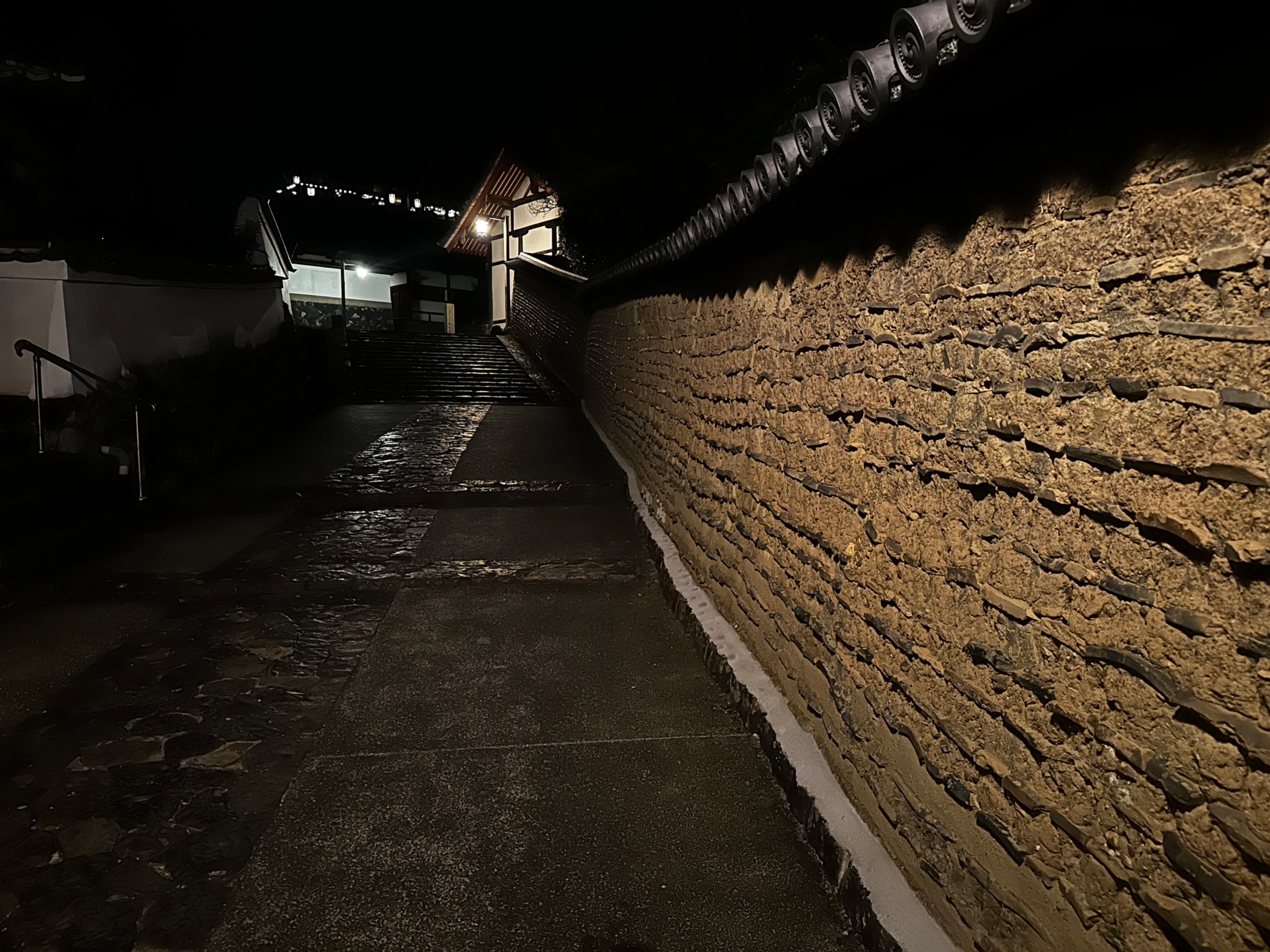
This time around, I have the path to myself. There were a couple of people up at the balcony, I will show you in a second, but there is basically no one to bother you.
Back to the main building and its balcomy. Nigatsu-dō (二月堂), meaning "The Hall of the Second Month," is one of the most significant and popular structures within the vast complex of Tōdai-ji Temple in Nara. The original hall was founded by the monk Sanetada in 752 CE, but it was the monk Jitchu (a pupil of Rōben) who established the annual repentance service there in 760 CE. The hall was rebuilt in 1669, just two years after the original structure was destroyed by fire during a religious service in 1667. The current main hall is a designated National Treasure of Japan. It is known for its beautiful wooden construction and its expansive veranda that offers breathtaking panoramic views of Nara City, especially during sunset.
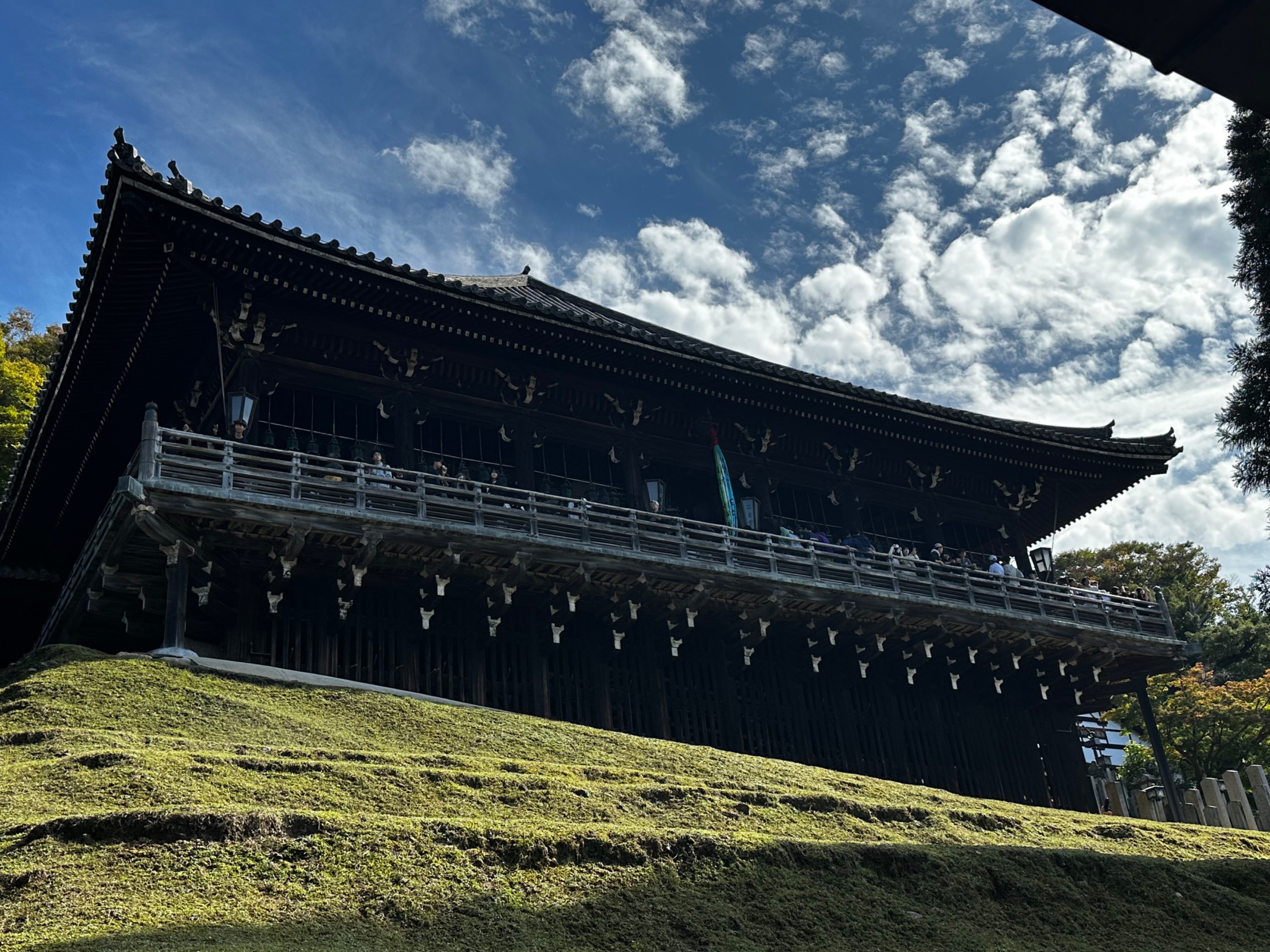
There you have it! It is spectacular, and no I haven't there at sunset, lots of people go there to see just that, as it is popular on Instagram. Yet, I was there at 7pm. I can tell you that is it better at 7pm.
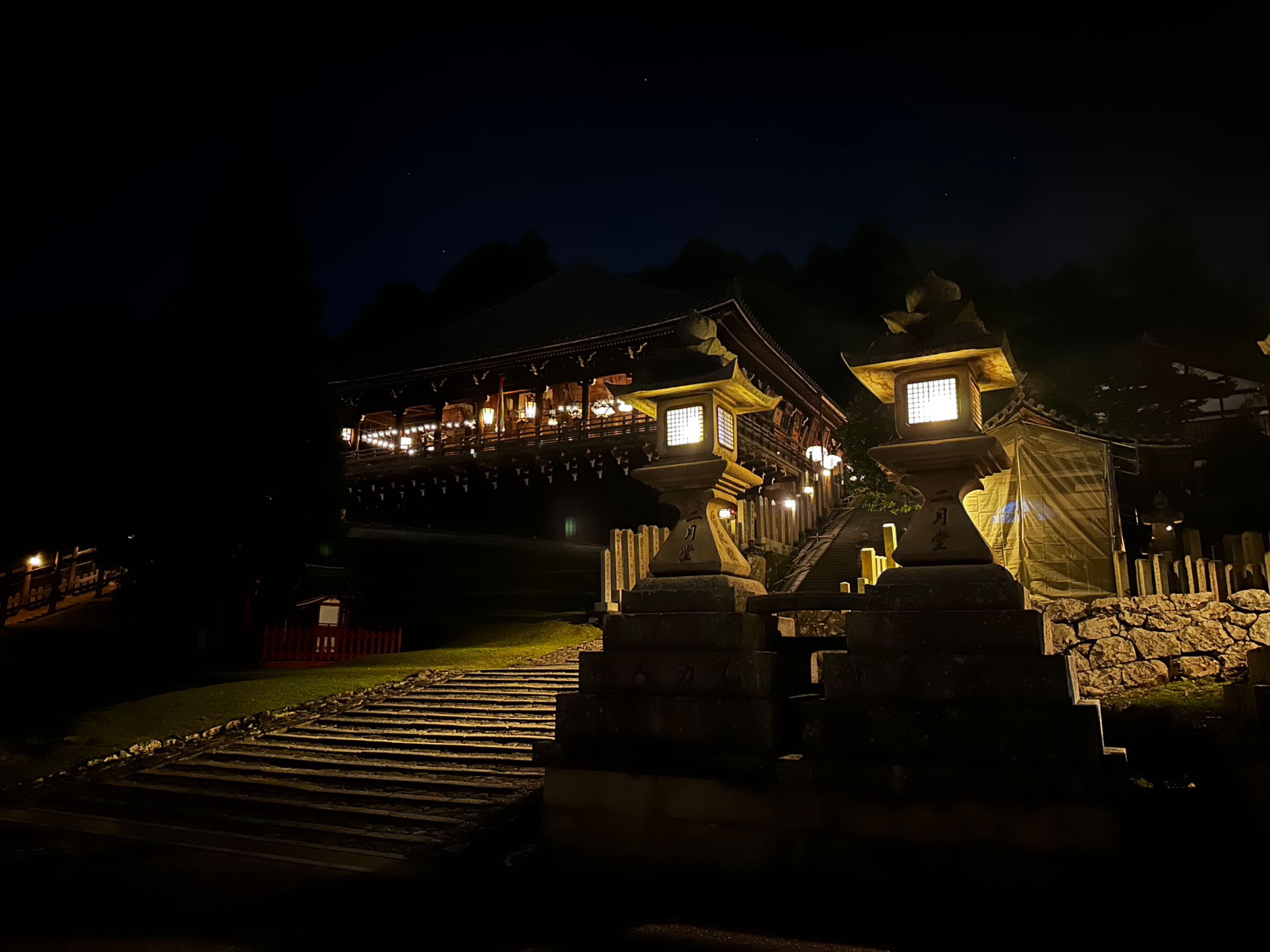
My goodness! I am lost for words and all I can tell you and I have spend about 30 min sitting still at this spot.
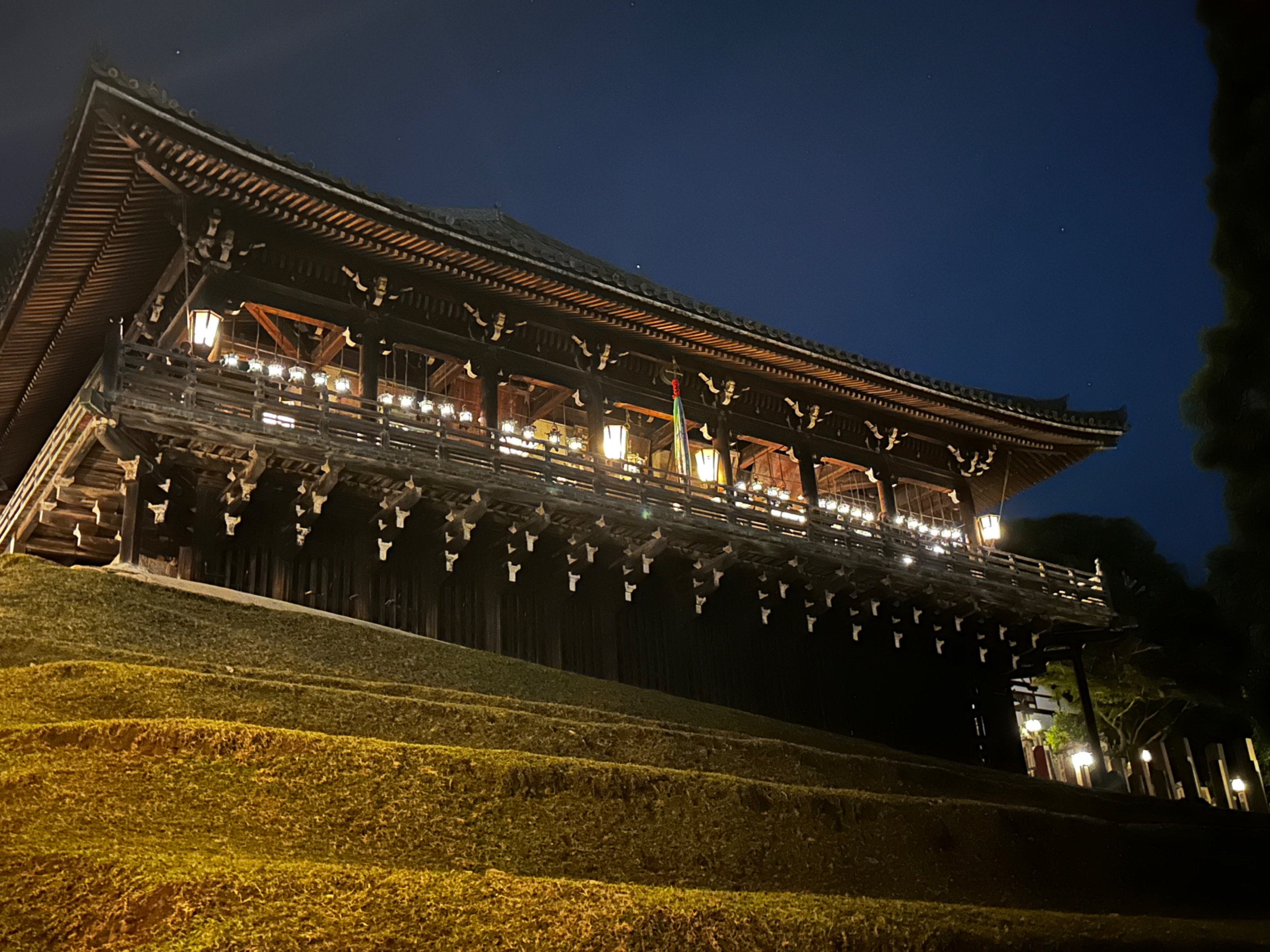
Above is almost identical view of the balcony that I had during the daytime, and I like this one better. Yes, the entrance to this building and its balcony is free and it is open 24/7. For an world heritage site, I say that swells, I have been to many world heritage sites, and I can't remember any building open to public for 24/7.
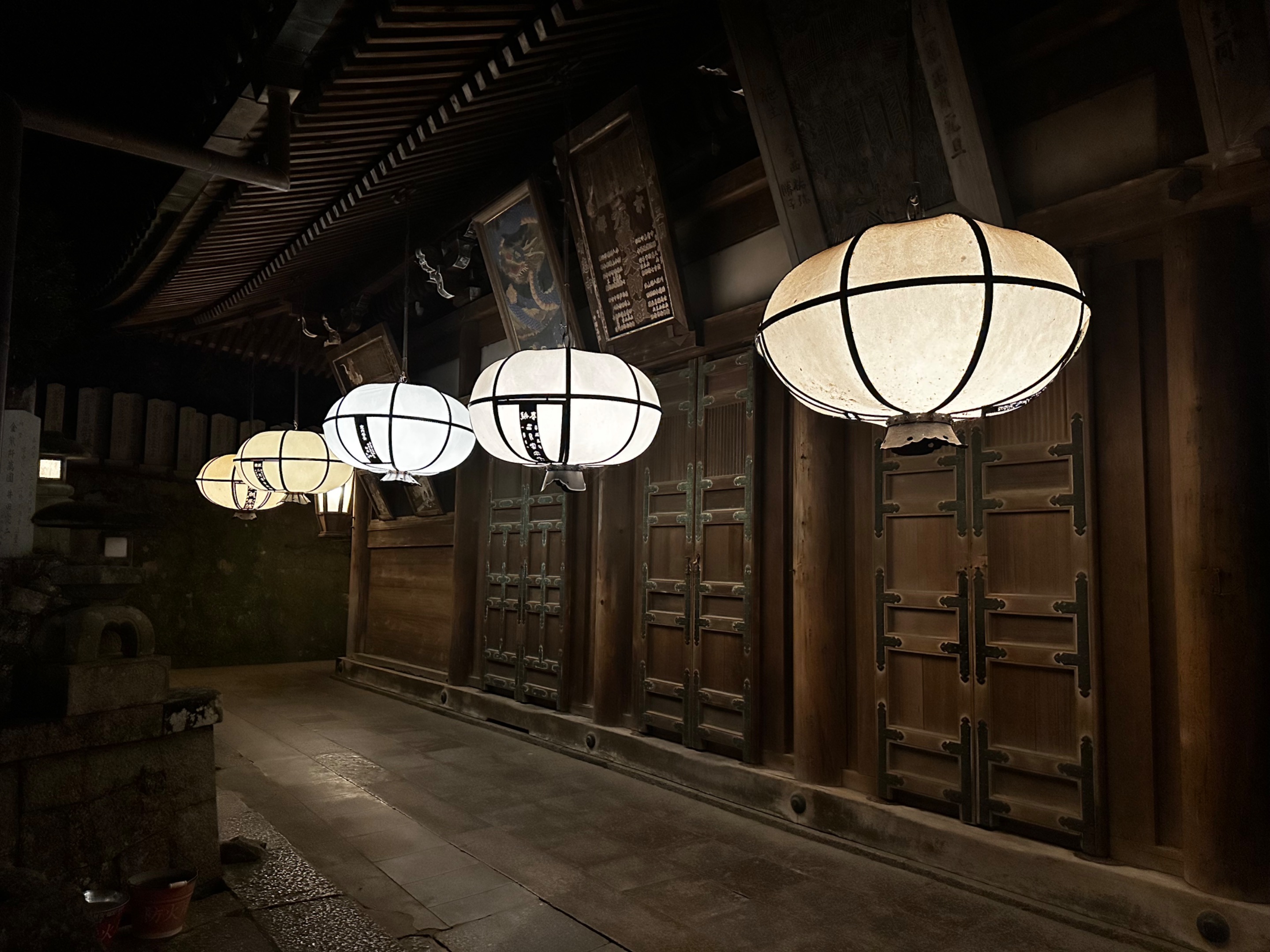
This is lanterns inside the building.
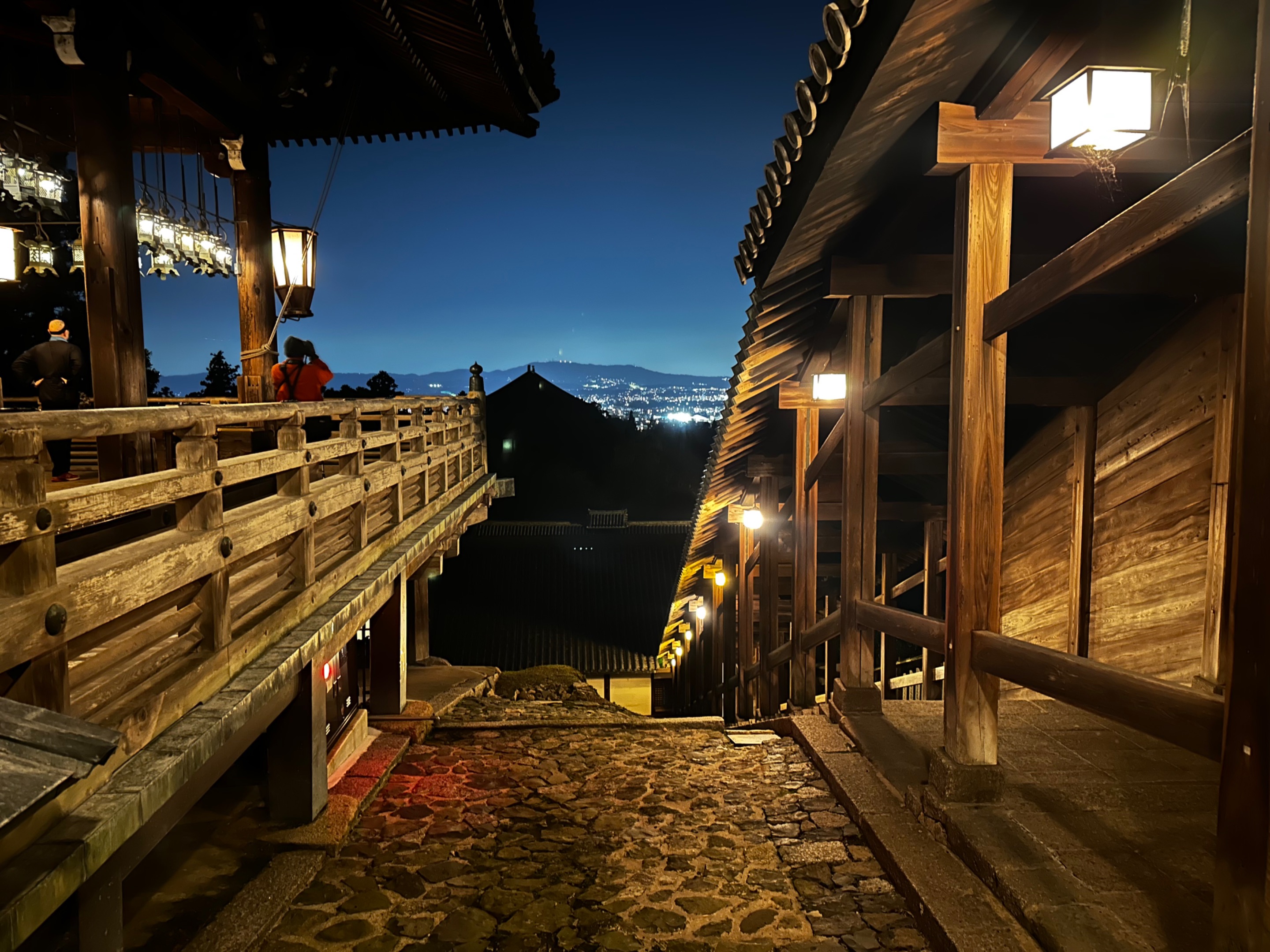
And the view down towards the city of Nara. I kept the two individuals in the frame on purpose. I felt a couple of humans are needed to add to the element.
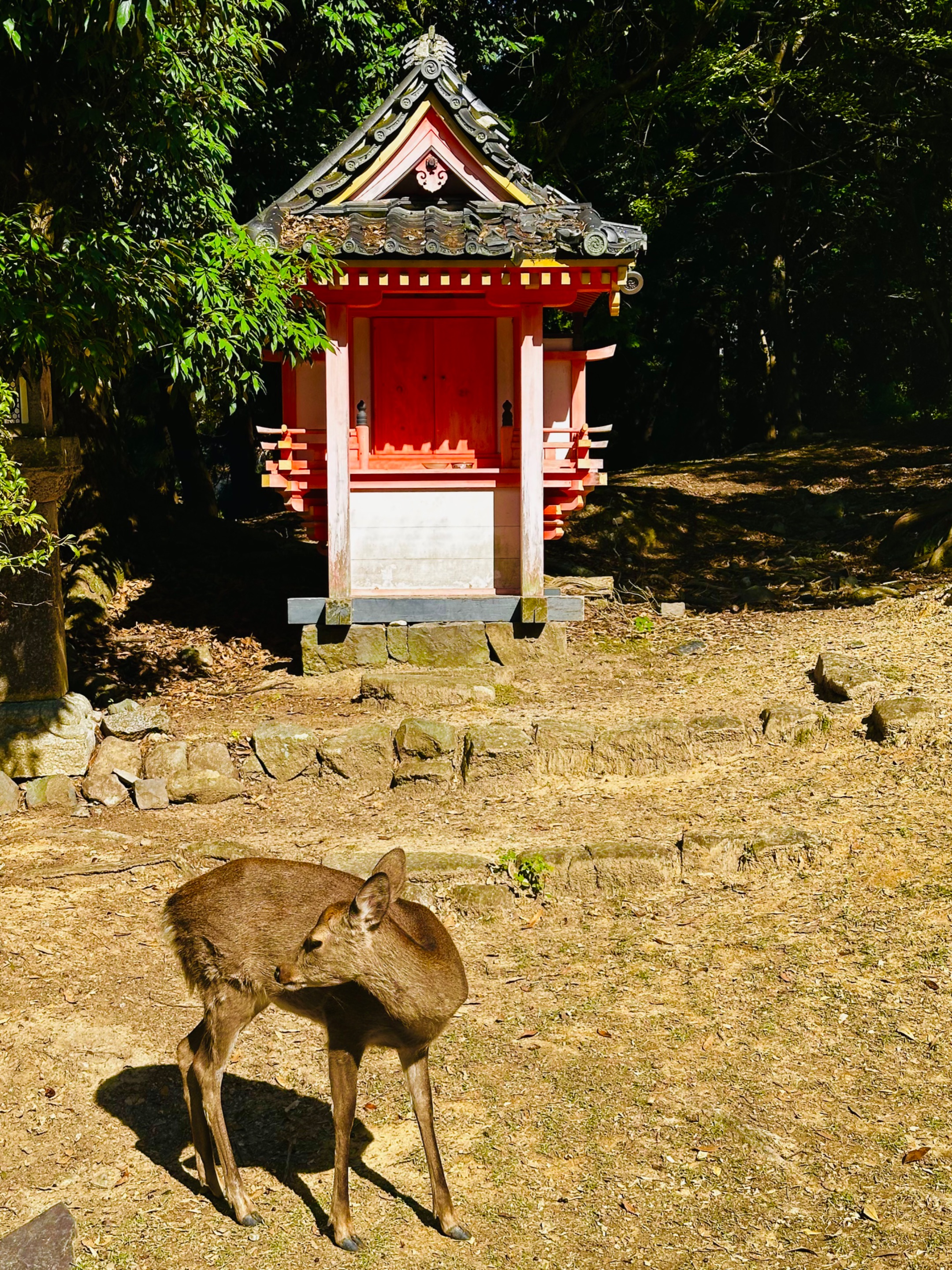
I say the magic lives on at Nara. Below is the humble location of Sugawara-no-Michizane stone tablet, with the poem I started the post with. No one goes there, and I think that is fabulous. The poem's significance is cemented by a famous legend. It is said that Michizane’s plum tree was so moved by its master's poetic plea that it uprooted itself and flew from Kyoto to Dazaifu to be with him which was his final resting place in exile.
There is a aftermath to this story. After Michizane's death, a series of natural disasters—including lightning striking the Imperial Palace and the sudden deaths of some of his accusers—led the court to believe these calamities were the work of his vengeful ghost (onryō). To appease his spirit, he was posthumously forgiven, reinstated to his former titles, and deified as Tenjin-sama (Heavenly Deity). Michizane, as Tenjin-sama, eventually transformed into the benign Shinto god of scholarship, learning, and calligraphy. Today, he is revered at thousands of Tenmangu shrines across Japan, which are particularly busy with students praying for success before entrance exams. His love for plum blossoms makes them the emblem of Tenmangu shrines.
There you have it. That was my day yesterday! I hope I can get a few more days like this one before I can't anymore :)

Comments
32 commentsYou can check out this post and your own profile on the map. Be part of the Worldmappin Community and join our Discord Channel to get in touch with other travelers, ask questions or just be updated on our latest features.
See this is why I like you @azircon. You can be so matter of fact and scientific, and give us historical facts, but you also become emotionally moved by beauty, history, landscape.
I've been to many popular places but rarely go to sunrise or sunset as it's too busy. The exception was Bagan, but we still found a less frequented stupa.
This is probably the most enticing post I have read about Japan. Perhaps I'll start the Japanese travel dream after all.
Thank you Riv. I am touched!
Do you know if it worked? I have a great deal of respect for most of the Buddhist teachings. In theory, that can be a great path to peace. Would be interesting to know if it had that effect.
Sounds like you're really enjoying your time, I'm happy for you! How's the Japanese coming along, are you able to practice a few words? What is the reaction by the locals when you try?
Nope.
The building was incredibly expensive and used a ton of resources. This massive economic strain was not what a population already weakened by famine and disease needed. It was far from popular and increased unrest rather than unifying everyone.
Long term, it led to Buddhism becoming entwined with politics, and with the temples becoming very rich, which also led to less stability and more unrest.
Wow, that's sad, but somewhat predictable. Another teaching for not using religion/spiritual practices for politics and power plays. Which most existing religions and their own power structures seem to represent as well.
Good point. Similarly expensive are the Pyramids, Taj Mahal, and the Great Mosque of Isfahan.
All required public sweat and in many other cases forced labor.
But they were constructed. Without these visions and public labor very few of the world's national monuments would have existed. If they didn't exist we can't enjoy them today can we? :)
Every public project, if we think about it in the context of that time you may say that was unnecessary. Think about Lunar landing :)
Oh and religion is always intertwined with politics:)
Isn't that true today? I am not saying it's good. I am saying it's inevitable.
Sure it worked:)
The Buddha was constructed
People have stuff to do as opposed to brooding
The same thing worked in modern times as well. The largest growth of the US national park system happened due to social services created right after the Great Depression by FDR. It's an identical project just different time and space. There are many other examples.
Lol that's a hilarious definition of "it worked" 🤣
Hey! I stick to that definition. History has always been about kings and kingdom and things that were built by them. Is that good? No. But is there a history of peasants? Not exactly. It is good? No. Is there ever going to be any other way? No.
So at least we have the Buddha to look at. Those sufferings would have happened one way or the other.
A friend told me the other day a story, a comparison that a friend had made to him.
"What is the most important development of humanity in recent history, meaning the last 50 years?"
"1 billion people in China are not extremely poor anymore."
Now, the numbers on that can be flawed and wrong, but the perspective is interesting. Everything we live today is insignificant in a bigger scope. So are the immediate, short term effects of building the Buddha. It's an amazing statue now. There are less people hungry now than 50 years ago. All those people 50 years ago still suffered back then, that didn't change at all. But it's less today.
The internet
Lots of interaction but people don't talk here to strangers :) which is also something that is expected
That's a shame! Here they're very open and are so incredibly happy when someone says something in Kichwa, even if it's just "Good morning" or, even better "Thank you". Most immediately try to teach you a few more words.
Yes, there are a lot of good mornings and thank you :)
Where I come from originally we don't call that conversations :)
Me, neither, nor did I ;-) It doesn't have to be a conversation at your stage of learning (or mine of Kichwa). Anyway, I hope you can find some locals to throw words around with and see what happens, without being beheaded by a Katana.
Great stuff. We'll make you a fan of Japanese poetry, after all! I think I've translated that one on Hive long ago. Many haiku refer to it.
There are so many legends about Michizane. One of my favorites links him to Taira no Masakado. Around 940, Masakado declared himself the true emperor and led a rebellion, only to be defeated and beheaded. But the story doesn’t end there: his head was said to cause disasters for centuries afterward. Even today, his grave in Tokyo is maintained and honored by government officials — not out of reverence, but out of fear that neglect might bring misfortune.
The link is Masakado is said to be a reincarnation of the vengeful spirit of Michizane.
Fascinating stuff! As you said it once before, a lifetime is not enough!
You really are seeped deep into Japan, poem, history and culture. At this rate, you'll become Japanese soon!
If you visited Nara a few weeks earlier, you could have metup up with @acidyo here
I may have heard people complaining about getting downvotes at the park!
lol
Yes, he mentioned that to me.
It really appears that this trip is turning into everything you had ever hoped it would be. I am glad you are having such a great time, seeing so many awesome things, and living your dream. I can almost feel the history emanating from some of those places via your photos.
Yes, can't complain at all. I am lucky!
You have described everything very beautifully. I really enjoyed reading your blog. I especially enjoyed seeing the picture of the statue.
A lot of research has been made before the travel it seems, our temples are much more crowded than this, strange such nice places have so less crowd.
Oh, it had a lot of crowd. I chose certain part of the day, early morning and after sun set to wonder around. But no nothing like Taj Mahal or Tirupati or Puri Jagannath Mandir :) People who complain about crowds in Japan haven't seen that yet, not that they need to see it!
What a way to blend customs and poetry in the description of a journey! I think almost all Eastern cultures have that magic. I enjoyed it very much. Thank you very much.
I appreciate the comment and the visit.
O dear ;) I wonder how all the deer feels with all those people around them. I am sure they got to us, but I am still not sure if it is a good idea to let all the humans roam free. Let's give Nara back to its right owners, if you agree, raise your paw!
Hiya, @lauramica here, just swinging by to let you know that this post made it into our Honorable Mentions in Travel Digest #2729.
Your post has been manually curated by the @worldmappin team. If you like what we're doing, please drop by to check out all the rest of today's great posts and consider supporting other authors like yourself and us so we can keep the project going!
Become part of our travel community: