














































No posts found
Try adjusting your filters or wait for the worker to classify more posts.


Film Review: Red Cliff (2008 - 2009)
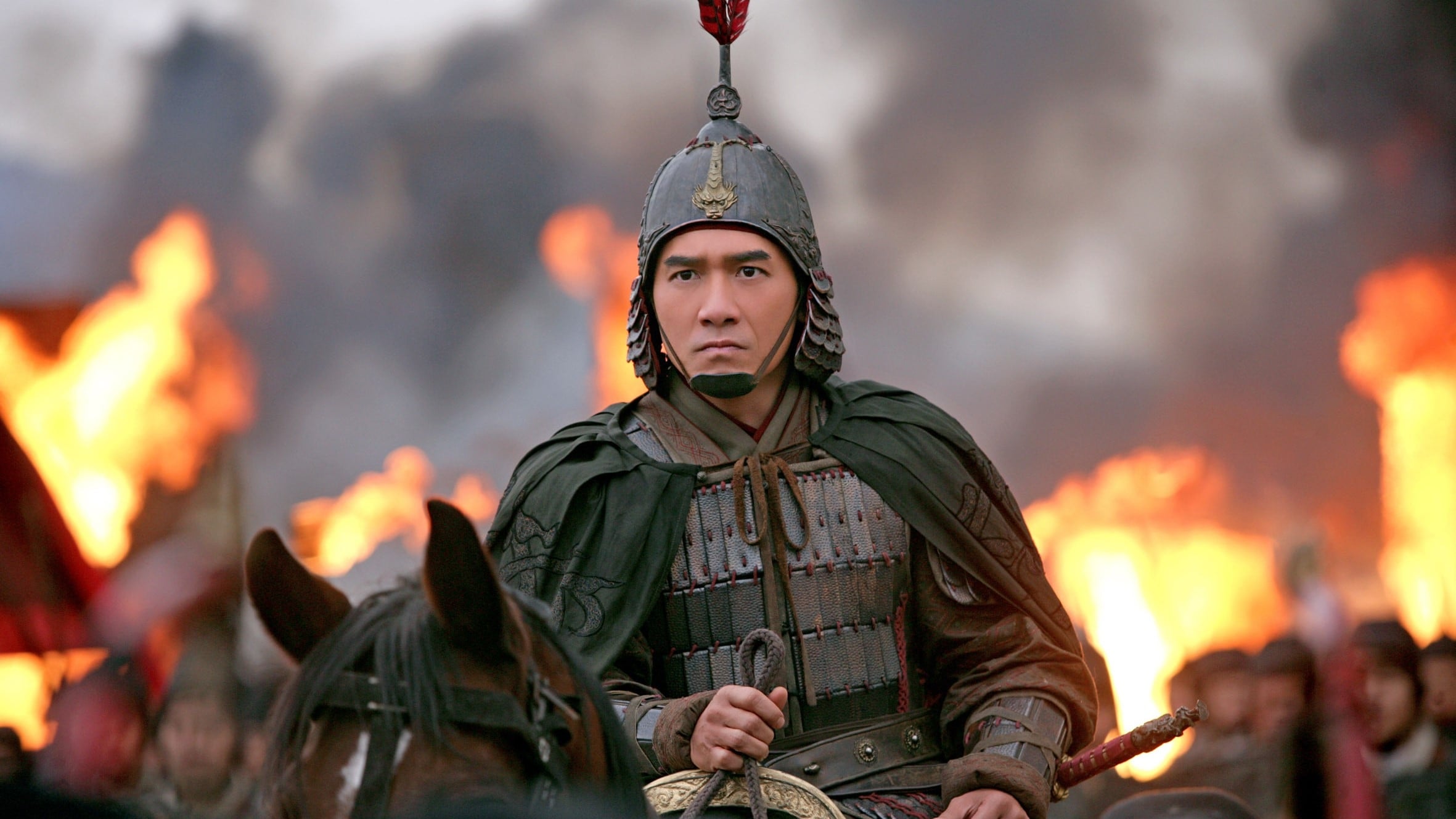
There is an old Chinese curse, or so the apocryphal saying goes: “may you live in interesting times.” Few periods in history embody this sentiment more perfectly than the era of the Three Kingdoms, which convulsed China throughout the third century AD. It was a time of fractured empires, shifting allegiances, and larger-than-life characters whose exploits have simmered in the collective imagination for nearly two millennia, inspiring countless works of art, literature, and, in our modern age, film, television, and video games. Depicting one of the seminal events of this tumultuous age, John Woo’s two-part cinematic behemoth, Red Cliff, is arguably the most audaciously epic film of the twenty-first century. It is a staggering achievement in scale and spectacle, a triumphant return to form for its director, and a work that simultaneously exemplifies the grandeur and the inherent limitations of translating a nation’s foundational mythos for a global audience.
The event in question is the Battle of the Red Cliffs, a pivotal naval engagement in the winter of 208 AD. The film draws its narrative not from dry historical chronicles but from the fertile, dramatised soil of Luo Guanzhong’s fourteenth-century classic, Romance of the Three Kingdoms. The setting is a China in collapse. The Han Dynasty is a hollow shell, crippled by corruption and peasant revolts, its territory carved into a patchwork of warlord fiefdoms. From this chaos emerges the formidable Cao Cao (Zhang Fengyi), who has ruthlessly consolidated power in the north, installed the young Emperor Xian (Wang Ning) as his puppet, and now turns his gaze southward with an imperial mandate to “pacify” all rivals. His hegemony is challenged only by two independent powers: the virtuous Liu Bei (You Yong) in the southwest, and the young but proud Sun Quan, Duke of Wu (Chang Chen), in the southeast. After Cao Cao’s overwhelming force routs Liu Bei’s army, the latter’s peerless strategist, Zhuge Liang (Takeshi Kaneshiro), is dispatched to forge an alliance with Sun Quan. This fragile coalition, masterminded by the brilliant, mutually respectful duo of Zhuge Liang and Sun Quan’s commander Zhou Yu (Tony Leung), faces seemingly insurmountable odds. Their strategy hinges on a single, audacious gamble: to make their stand on the Yangtze River and exploit Cao Cao’s inexperience and vulnerability in naval warfare.
Commissioned for the 1800th anniversary of the battle and forged through an unprecedented Sino-Japanese-Korean co-production, Red Cliff was among the most ambitious and expensive Asian films ever made. It also marked a monumental homecoming for John Woo. His Hollywood tenure in the 1990s and 2000s, while commercially viable, often felt like a dilution of his distinctive style, constrained by studio notes and PG-13 sensibilities. Red Cliff offered a return to his Hong Kong roots, but on a scale he could previously only dream of. The project was so vast it was split into two films, totalling over five hours: Part I released in July 2008, Part II in January 2009. Both were box office phenomena in China, dethroning Titanic from its record. For international markets, a drastically condensed, two-and-a-half-hour version was later released, lumbered with explanatory voice-overs in a clumsy attempt to bridge the cultural gap.
Woo has stated that his motive was to present a unifying spectacle for a contemporary Chinese audience, using a historical tragedy of division to illustrate the perils of strife. This philosophical undercurrent is woven into the film’s conclusion. Despite Cao Cao’s catastrophic defeat, the script pointedly refuses to crown clear victors. In a poignant final scene, Zhuge Liang and Zhou Yu, now fast friends and mutual admirers, sombrely acknowledge that the very alliance that saved them will soon dissolve, foreshadowing the decades of warfare between their respective states of Shu Han and Wu that would follow. The battle, Woo suggests, was not a resolution but merely a bloody pause.
For aficionados of Woo’s filmography, Red Cliff is a glorious return to the principles of “heroic bloodshed,” now unshackled from Western censorship and inflated to a biblical proportion. The intimate gun ballets of Hard Boiled are replaced with orchestrated carnage on a massive scale: hails of arrows, sweeping cavalry charges, shield walls, fire attacks, and naval engagements. The violence is constant and brutal, yet Woo manages, with considerable skill, to avoid monotony. Each set-piece has a distinct tactical logic. A standout is the defence against Cao Cao’s vanguard in Part I, where the allied forces ingeniously use a tortoise-shell formation to ensnare and dismantle the superior cavalry. Part II culminates in the legendary fire attack on Cao Cao’s fleet, a sequence of breathtaking, almost operatic destruction rendered all the more spectacular by its nocturnal setting.
This “heroic bloodshed” is, as ever in Woo’s world, drenched in pathos. Adhering to the traditional Chinese narrative mould, Cao Cao is unequivocally the villain—ambitious, cruel, and hubristic—while the alliance are the honourable heroes. The film injects melodrama through two key female characters. Zhou Yu’s wife, Xiao Qiao (Lin Chi-ling), is elevated from a minor historical footnote into a catalyst for the war and a crucial agent in its climax. Her decision to enter Cao Cao’s camp to delay him, using tea ceremony as a weapon, is pure cinematic contrivance, yet it provides a human-scale tension amidst the grand strategy. Similarly, the subplot involving Sun Quan’s spirited sister, Sun Shangxiang (Zhao Wei), who infiltrates the enemy camp disguised as a boy and befriends a simple northern soldier nicknamed “Pig” (Wu Jing), offers effective comic relief and genuine heart. Their charming camaraderie makes its inevitable, tragic payoff—Pig’s death in the heat of battle, witnessed by a grief-stricken Sun Shangxiang—one of the film’s most emotionally resonant moments.
Woo’s direction is confident and sweeping, displaying a masterful command of both intimate drama and colossal action. He is ably supported by Taro Iwashiro’s magnificent score, a fusion of traditional Chinese motifs and stirring Western orchestration that elevates every scene without overwhelming it.
Ultimately, Red Cliff is a remarkable film that, in terms of sheer logistical ambition and the visceral thrill of its pre-industrial warfare, surpasses most Hollywood historical epics of recent decades. Yet, its greatest strength is also its primary barrier to universal appreciation. The script operates on the assumption that its audience possesses a familiarity with the Three Kingdoms lore akin to a Western viewer’s knowledge of the Marvel Cinematic Universe. Characters, motivations, and historical weight are often conveyed through allusion rather than exposition. For the uninitiated, the significance of certain alliances, betrayals, and the battle’s profound historical aftermath—which cemented the tripartite division of China for another seven decades—can feel elusive. The international cut’s ham-fisted narration only underscores the problem. One is left admiring the breathtaking vista of a majestic cathedral without fully understanding the religion practised within it.
Red Cliff, therefore, is a monumental, flawed masterpiece. It is John Woo’s magnum opus, a breathtaking visual and visceral experience that successfully captures the thrilling, tragic spirit of its source material. It is also a film that remains, at its heart, a profoundly Chinese story told on a Chinese scale, for a Chinese audience. For those willing to meet it on its own terms, it offers a cinematic experience of unparalleled grandeur. For others, it may remain a stunning, yet occasionally impenetrable, pageant of ancient history.
RATING: 7/10 (+++)
==
Blog in Croatian https://draxblog.com
Blog in English https://draxreview.wordpress.com/
InLeo blog https://inleo.io/@drax.leo
InLeo: https://inleo.io/signup?referral=drax.leo
Leodex: https://leodex.io/?ref=drax
Hiveonboard: https://hiveonboard.com?ref=drax
Rising Star game: https://www.risingstargame.com?referrer=drax
1Inch: https://1inch.exchange/#/r/0x83823d8CCB74F828148258BB4457642124b1328e
BTC donations: 1EWxiMiP6iiG9rger3NuUSd6HByaxQWafG
ETH donations: 0xB305F144323b99e6f8b1d66f5D7DE78B498C32A7
BCH donations: qpvxw0jax79lhmvlgcldkzpqanf03r9cjv8y6gtmk9
Comments